PYTHON / WEB SCRAPING AUTOMATION
A property monitoring system that notices listing and price changes automatically.
A scheduled Python data pipeline that filters Trade Me properties, compares snapshots and emails meaningful changes.

01 / The real problem
Automation starts where the process breaks.
Finding the right listing was not the hardest part; repeatedly revisiting results and remembering old prices was. The useful signal was a change—a new matching property, a price movement or an updated listing—not another full page of unchanged data.
Listings were noisy
The source contained far more properties than the buyer's criteria allowed, so filtering had to happen consistently.
Snapshots had no memory
Fresh data only becomes monitoring data when it is compared against a reliable previous state.
Alerts could become spam
Sending every result on every run would hide the exact changes the user cared about.
A clear path from trigger to outcome.
Collect
A scheduled Python process fetches the current property listing data.
Filter
Listings are normalised and filtered against the selected property criteria.
Compare
The latest snapshot is compared with stored records to isolate additions and changes.
Notify
Only relevant changes are written to the spreadsheet and included in the email alert.
03 / What I built
The implementation.
04 / Result
The system replaces repetitive browsing with exception-based monitoring. The user can review structured history at any time and receives an email only when the underlying property data produces something worth checking.
✓05 / In the product
Real screens. Real workflow.
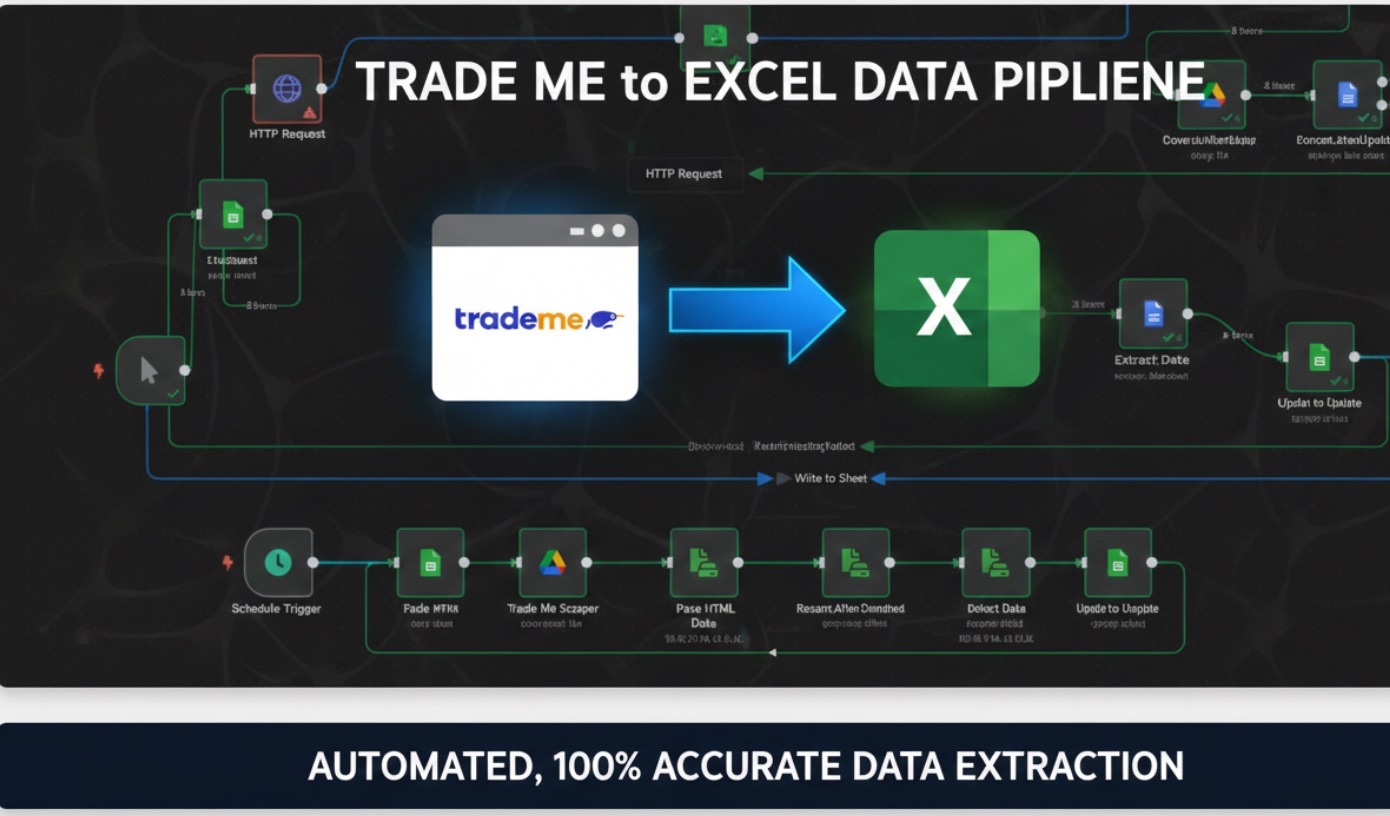
01 — The end-to-end monitoring process turns listing pages into actionable change alerts.
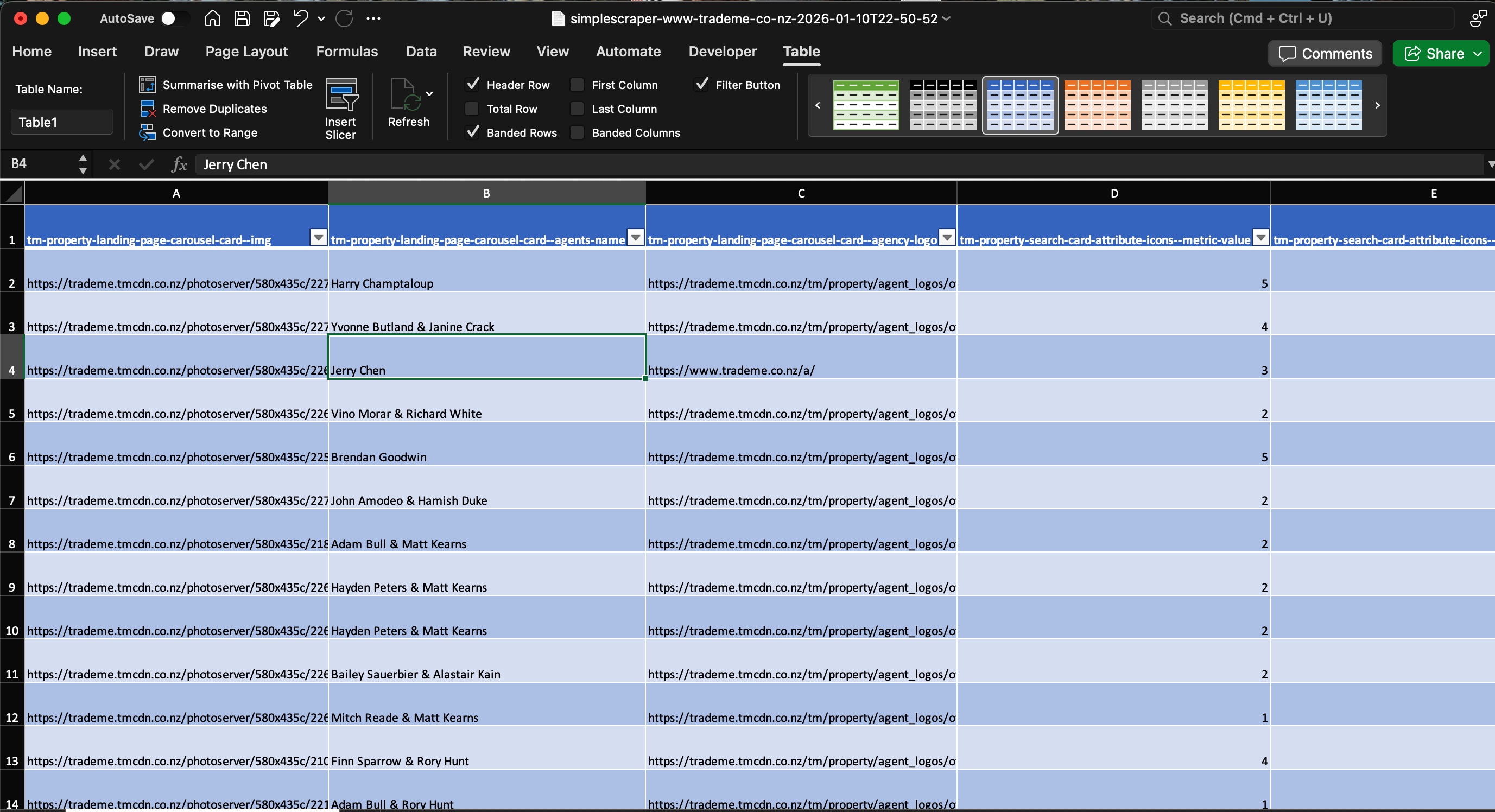
02 — A structured spreadsheet keeps the current state and historical comparison readable.